
New CD - Strathclyde Concerto and Clarinet Quintets
Dimitri Ashkenazy performs Peter Maxwell Davies: Strathclyde Concerto No. 4 and Hymn to Artemis Locheia
It’s hard to imagine the impoverished world of working class Northern England where Peter Maxwell “Max” Davies grew up in the 1930s and 40s, but if you have ever read George Orwell’s The Road to Wigan Pier, you will have some idea of it. In his 1937 book, Orwell described the Dickensian conditions and widespread unemployment that Max was born into three years before. Born and raised in Salford, a suburb of Manchester adjacent to the Wigan of Orwell’s title, Max’s early life was first dominated by the great worldwide depression that affected England as it did the USA, and then the horrors of World War II and the German bombing of Manchester and other British cities during the Blitz. These experiences would color the rest of his life, and are of crucial importance to understanding his work.
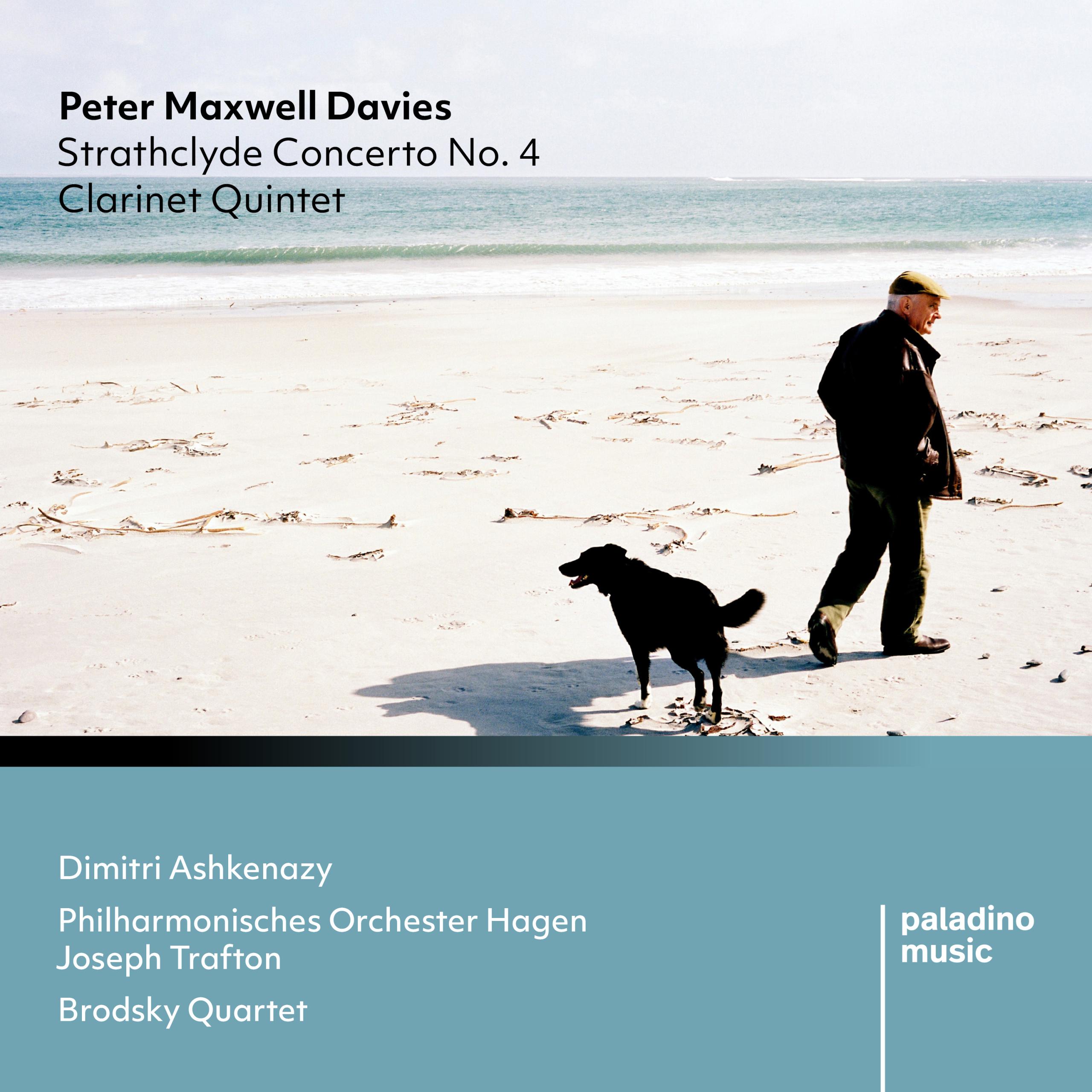
Clarinettist Dimitri Ashkenazy brings together two strikingly different works by Peter Maxwell Davies on this recording, showcasing the composer's deep affinity for the instrument across different periods and contexts. The Strathclyde Concerto No. 4 is performed with the Philharmonic Orchestra of Hagen, whilst the emotionally charged Hymn to Artemis Locheia features Ashkenazy alongside the Brodsky Quartet.
Davies's feeling for the potency and bravura of the clarinet goes back to works of the 1960s, yet the Strathclyde Concerto No. 4 represents a return to the instrument from a very different perspective. Whilst earlier pieces such as Stedman Doubles (1955, revised 1968) and the legendary Hymnos (1967) frankly encourage the clarinet's potential for vehement expression, this concerto emulates the warmth and mellifluousness of Mozart's two late masterpieces for the instrument—though, as in Mozart, these qualities coexist with a high degree of athleticism in the solo writing.
The concerto is a journey towards its theme, which crystallizes in the coda. This is a pentatonic tune by a nineteenth-century folk-musician called Morrison, emblematic of the work's dedicatee. Sir Peter heard the folk-tune filling the empty hall whilst standing in the parliament building on Edinburgh's Calton Hill. The progress towards this tune takes in a short lento introduction and main Allegro moderato, a 'shuddering' Adagio, a clarinet cadenza supported by lower strings, and a pianissimo ending unique in concerto literature—not only an 'inverse' climax but a real resolution instead of a question mark. The clarinet emerges quietly from the sinuous musings of the orchestral bass clarinet, with the subtle discrepancy in tuning between the solo clarinet in A and the bass clarinet in B-flat setting up a basic tension resolved only at the work's end. Underpinning this is a journey from the modal area of C to that of F-sharp—so that the folk-tune arrives precisely at the moment where the greatest possible harmonic distance has been traversed.
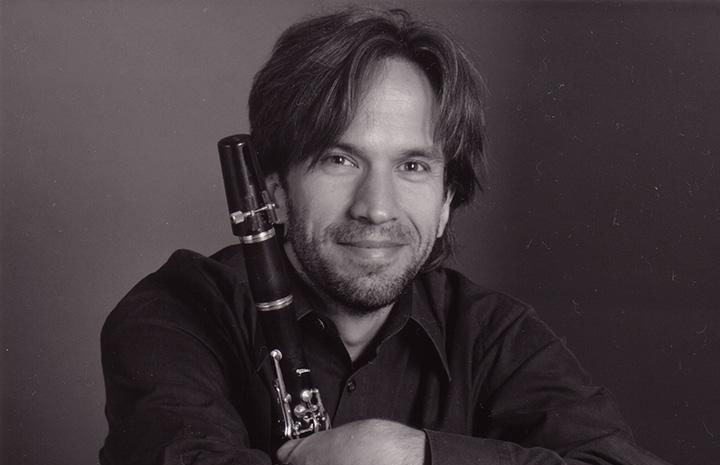
Peter Maxwell Davies spent a day at a gynaecological clinic in London at the invitation of Professor Ian Craft, who commissioned Hymn to Artemis Locheia in memory of his father. During his time there he met many people and shared in some of the deep emotions they experienced. Artemis Locheia is the Greek goddess of fertility. In this one-movement, 25-minute work, the joy and exuberance experienced by couples when pregnancy is confirmed is captured. There are many tempo changes and two extended cadenzas for the clarinet. The work was premièred by Dimitri Ashkenazy and the Brodsky Quartet—a performance whose richly coloured textures and emotional depth embody what is most human in music-making: the process, the challenge, and the moving transformation that emerges from it.